Where the space between becomes the destination.
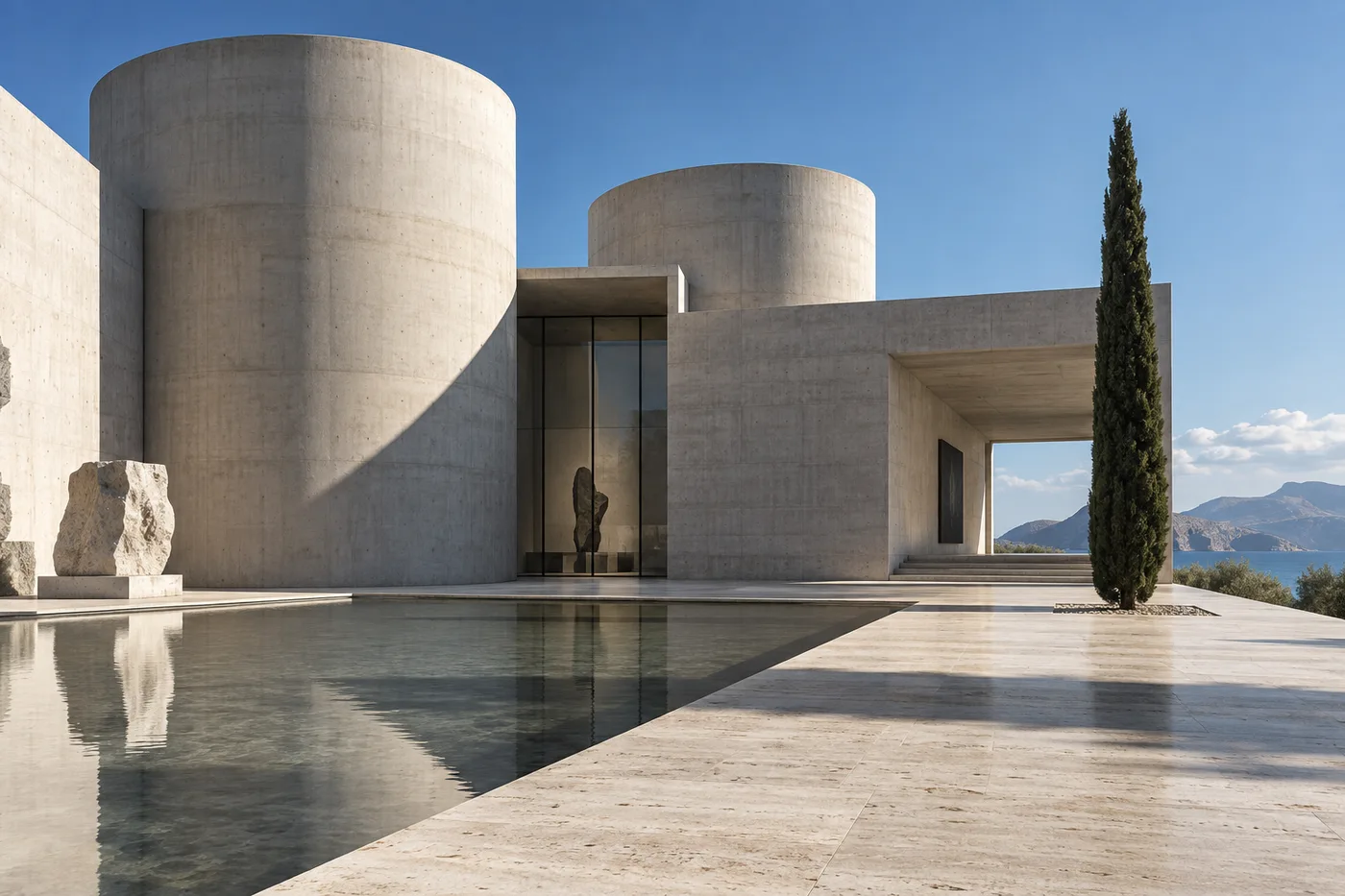
The museum is imagined as a small family of volumes rather than a single object. Curved walls meet rectangular galleries, leaving pockets of outdoor space between them. These intervals offer a gentler rhythm: encounter, pause, continue.
A shallow pool holds the light and reflects the building back toward itself. The water is visually active even when the courtyard is empty, registering small changes in weather and movement. One cypress provides a vertical counterpoint to the low horizon.
Visitors can read the main route from the entrance. The galleries branch from a shared courtyard, so returning to daylight also restores a sense of orientation. Circulation becomes part of the experience rather than a puzzle to solve.
This unbuilt concept considers how cultural buildings can welcome people who are simply passing through. A courtyard can offer value before a ticket is bought: shade, a meeting place, and a generous relationship with the city.
“The space between is part of the architecture.”